
Quieting the Mind When It Won’t Slow Down
You know those moments when your body is finally still…
but your mind is anything but?
You sit down at the end of the day—maybe the house is quiet, maybe your kids are finally asleep—and somehow, that’s when it all gets louder.
The to-do list.
That conversation you keep replaying.
The thing you forgot.
The thing you should’ve said.
The “what ifs” that won’t let go.
Even when you’re exhausted… your mind just keeps going.
We hear this all the time from clients.
And if this is you, we want to gently say:
Your mind isn’t broken.
But it might be overwhelmed.

Why Your Mind Won’t Slow Down
When your thoughts feel nonstop, it’s often not just a “thinking problem.”
It’s your nervous system.
Your body may be in a state of high alert—trying to stay on top of everything, scan for what’s next, and keep you one step ahead.
This can happen when:
● You’ve been carrying a lot for a long time
● Your stress never really gets a chance to settle
● You’re constantly stimulated (phones, noise, information… all of it)
● Your mind has become the place where everything gets processed
Your brain is trying to help.
It’s trying to protect you.
But over time, that constant “on” feeling can start to wear you down.
Signs Your System Might Be Stuck in “On”
You might notice:
● Lying in bed feeling tired, but wired
● Thoughts looping over and over
● Feeling on edge (even when nothing’s technically wrong)
● Difficulty focusing or finishing tasks
● A sense that something bad might happen… even if you can’t explain why
If that resonates, take a breath here.
This isn’t a personal failure.
It’s a nervous system that hasn’t had a chance to exhale.
What Actually Makes It Worse (Even Though It’s So Tempting)
Most of us try to think our way out of this.
But that can sometimes keep the cycle going:
● “I just need to stop thinking about it”
● “Why am I like this?”
● Scrolling at night to distract yourself (we’ve all been there)
● Working right up until bed, then expecting your brain to magically power down
None of this means you’re doing anything wrong.
It just means your system might need something different than more pressure.
A Simple Grounding Exercise (You Can Try This Anywhere)
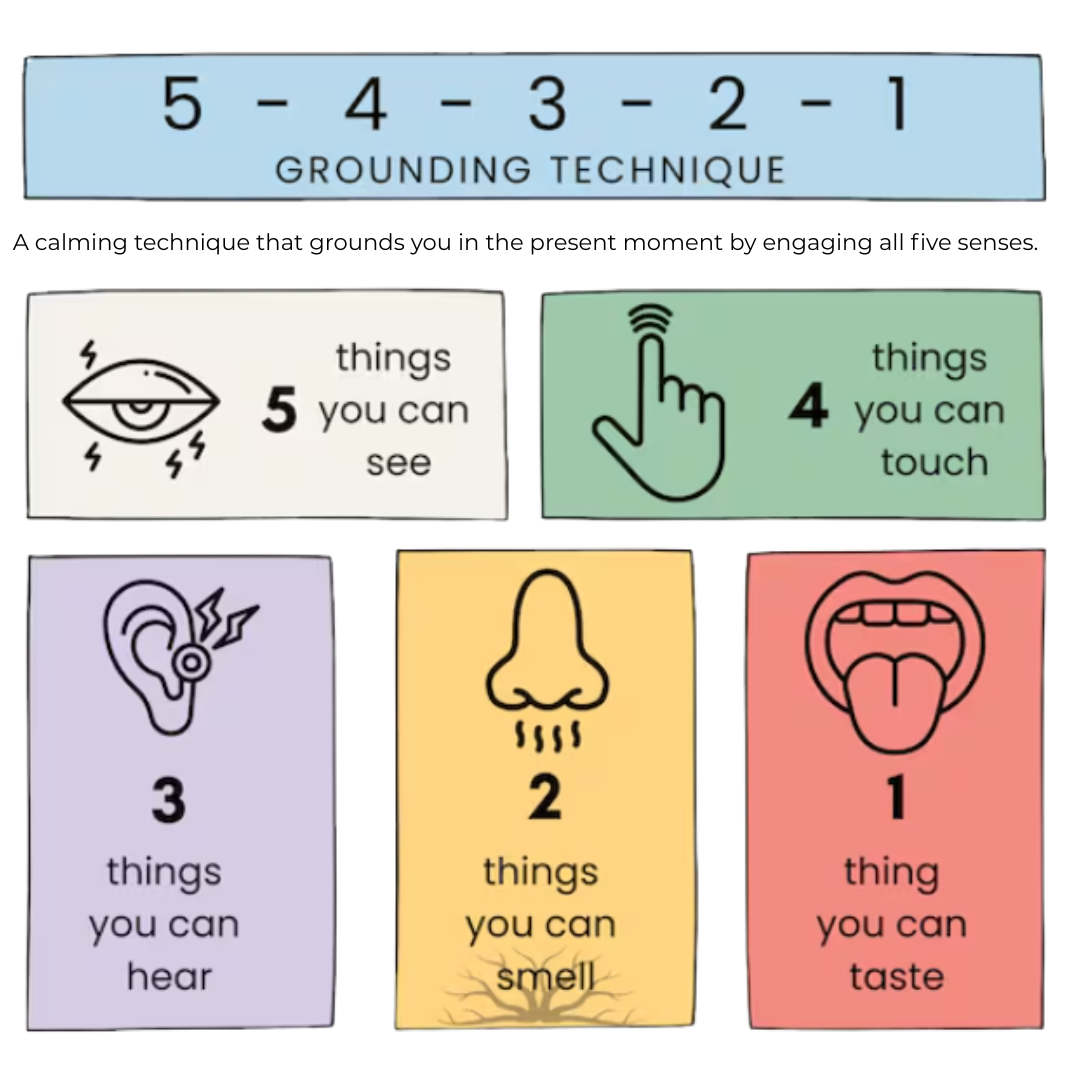
When your mind is racing, grounding can help bring you back into the present moment—gently.
Try this:
● Look around and name 5 things you can see
● Notice 4 things you can physically feel (your feet, your clothes, the chair you’re sitting on)
● Listen for 3 things you can hear
● Breathe. What 2 things can you smell.
● Name 1 thing that you can taste
No pressure to “do it perfectly.”
This isn’t about clearing your mind—
it’s about giving your body a moment to feel safe again.
Gentle Ways to Quiet the Mind
Instead of forcing your thoughts to stop, we shift toward supporting your system.
A few places to start:
Get it out of your head
A quick brain dump before bed can make a bigger difference than you think.
Slow your breath
Longer exhales tell your body it’s okay to soften.
Move your body (even a little)
A short walk, stretching, or simply changing your environment can help release built-up energy.
Create a wind-down rhythm
Not a perfect routine—just small, repeatable signals that it’s time to rest.
(Think less “I need a full routine” and more “what’s one thing I can do tonight?”)
When You Need More Support
Sometimes, this isn’t something you can—or should—navigate on your own.
At Center for Collaborative Health, we look at this through a whole-person lens.
As co-founder Macarena Corral, PsyD, LP shares:
“Seeing and understanding the whole person forms the foundation of successful treatment.”
Because when your mind won’t slow down, it’s rarely just about your thoughts.
It’s your nervous system.
Your experiences.
Your stress load.
Your body trying to process what hasn’t had space yet.
Healing isn’t about forcing yourself to think differently—
it’s about creating enough safety in your body that your mind doesn’t have to work so hard.
That’s where support can come in:
● Therapy for understanding patterns and building practical tools
● Acupuncture to help regulate the nervous system
● Trauma-sensitive yoga, Pilates, and other body-based approaches to reconnect safely with your body
You don’t have to piece it all together alone.
A Gentle Morning Reset (For the Days After a Busy Mind)
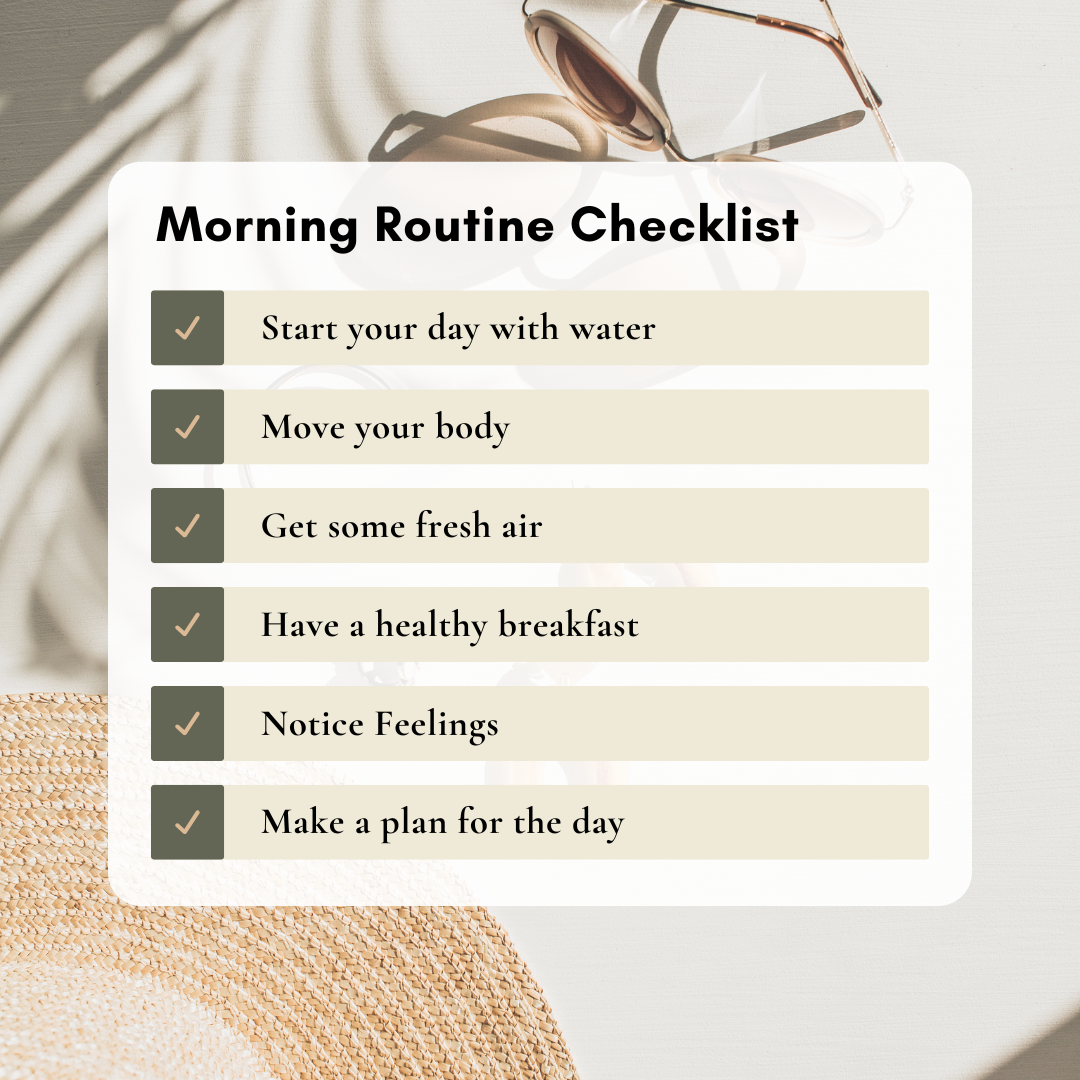
If your nights have felt heavy, your mornings don’t need to start the same way.
Here’s a simple way to begin again:
● Step outside (even for a minute)
● Take a few slow breaths before looking at your phone
● Notice your feelings
● Move your body in a way that feels good
● Ask yourself: What do I actually need today?
Not a perfect routine.
Not a complete reset.
Just a softer start.
A Final Thought
If your mind has been loud lately…
it might just mean you’ve been holding a lot.
And maybe—just maybe—
it’s not something you need to fix.
It’s something that needs care.
You deserve support that meets you there.
And your nervous system deserves a softer place to land.