
Minimalist Summer: How to Reduce Overstimulation for Kids (and You)
Is it just us, or have we all been fed the idea that summer is supposed to feel slower?
While standing in the bus stop line, parents gather with their coffee cups and talk about how they can't wait for summer, with no schedules, later bedtimes, and a little more ease.
Or at least that's what we tell ourselves.
Then June arrives, and suddenly we're juggling camps, sports, swimming lessons, playdates, vacations, snack bags, and trying to keep everyone entertained 24/7 while also keeping the house from looking like a toy store exploded.
And whether you're a stay-at-home parent, a working parent, or a caregiver, we think we can all agree that even with the sun shining, you're somehow wondering why you feel exhausted before noon.
If you've felt this way, you're not alone.
At Center for Collaborative Health, we hear from many parents who feel overwhelmed during the summer months.
Because let's face it—the question parents often ask each other isn't, "How are you doing?" It's, "What sports and activities are your kids signed up for?"
And if your calendar isn't packed with practices, camps, and activities every other day, those feelings of not doing enough can start to creep in.
What if they're bored?
What if I don’t sign them up for the sport, and now they will be behind?
What if I'm not doing enough?
It's the overstimulation of the constant pressure to be doing something.
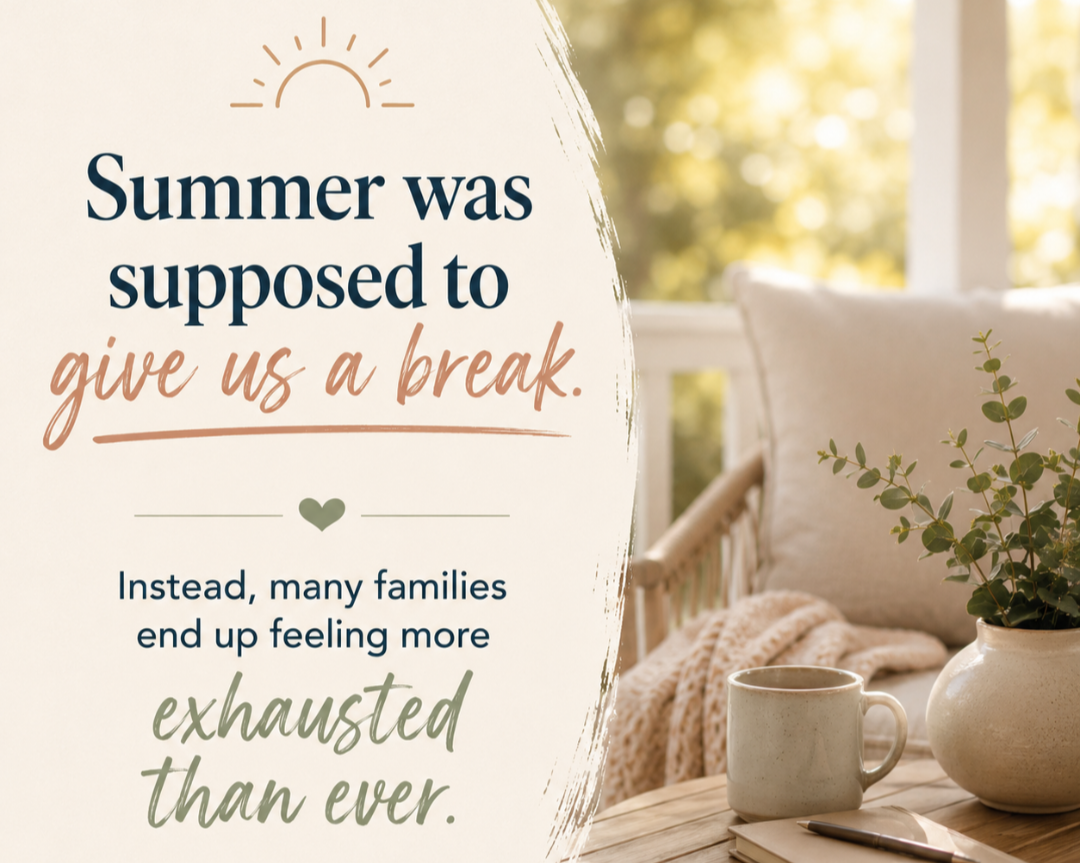
The irony? Summer was supposed to give us a break.
Instead, many families end up feeling more overwhelmed, more exhausted, and more disconnected than ever.
And it's affecting both kids and adults more than we realize.
What Does Overstimulation Actually Feel Like?
Overstimulation happens when our brains and nervous systems are taking in more input than they can comfortably process.
For kids, it may look like bigger emotions, more meltdowns, difficulty settling down, trouble sleeping, or constantly bouncing from one activity to the next.
For adults, it can feel like irritability, anxiety, mental exhaustion, difficulty focusing, or that overwhelming urge to hide in the bathroom for five minutes of peace and quiet.
Sound familiar?
The thing is, overstimulation isn’t always caused by something negative.
Sometimes it’s caused by too many good things happening all at once.
A packed calendar. Endless opportunities. Summer events. Sports. Camps. Family gatherings. More noise. More people. More decisions.
When our nervous systems don’t get enough time to reset, even fun activities can start to feel overwhelming.
Sometimes the answer isn’t adding more.
It’s creating more space.
The Case for a More Minimalist Summer
When we talk about a minimalist summer, we’re not talking about getting rid of all your toys, cancelling every activity, or becoming the family that only plays with sticks in the backyard.
We’re talking about creating more breathing room.
More space between activities.
More unscheduled afternoons.
More opportunities for everyone in the family to simple be.
Kids don’t need every minute filled to have a meaningful summer.
In fact, research has shown that unstructured play supports creativity, problem-solving, independence, and emotional development.
Some of the memories children cherish most aren’t expensive vacations or packed schedules.
They’re catching lightning bugs.
Building blanket forts.
Running through the sprinkler.
Helping make popsicles in the kitchen.
Reading books together before bed.
The simple stuff matters.

Four Ways to Reduce Overstimulation This Summer
1. Leave Space on the Calendar
Not every week needs a camp.
Not every day needs an activity.
Try protecting a few days each month where nothing is scheduled.
Your family doesn't have to earn rest.
2. Let Kids Be Bored
We know.
The moment every parent dreads.
But boredom isn't a problem to solve immediately.
It's often where creativity begins.
Some of the best play happens after children move through that initial "I'm bored" stage.
3. Reduce Digital Noise
Summer often comes with more screen time for everyone.
Instead of aiming for perfection, consider creating small screen-free pockets throughout the day.
A family walk.
A meal without phones.
Thirty minutes outside before turning on a device.
Small changes can make a big difference.
4. Check In With Your Own Nervous System
Parents are often the last people they take care of.
Ask yourself:
When was the last time I sat quietly?
When was the last time I did something restorative just for me?
When was the last time I felt truly present?
Your well-being matters too.
Because a regulated parent helps create a regulated environment for their children.
Sometimes We Need More Than a Summer Reset
While simplifying your schedule can help, there are times when stress, anxiety, burnout, or overwhelm run deeper.
If you find yourself feeling constantly on edge, emotionally exhausted, or struggling to enjoy everyday moments, it may be a sign that additional support could help.
At Center for Collaborative Health, we support children, teens, adults, and families through therapy, wellness services, and virtual care designed to care for the whole person.
You don't have to wait until you're completely overwhelmed to reach out.
This summer, consider giving yourself permission to do less.
Less rushing.
Less pressure.
Less noise.
Because sometimes the most meaningful thing we can add to our lives is a little more space to breathe.
Your family doesn't have to earn rest.
— Center for Collaborative Health
Learn about our services for the mind + body here. 🌿
_______________________________________________________________________________________________________________________
Written by the team at Center for Collaborative Health
Supporting individuals, parents, and families through therapy, wellness services, and virtual care throughout Minnesota.